In January this year, after Prime Minister Narendra Modi went snorkelling in Lakshadweep, the island was all over the news. While that excitement has tapered off now, the islands need continued attention from both the tourism and nature conservation points of view. For it's not just about the attraction of coral reefs, but for the biggest fish in our seas—the Whale Shark.
International Whale Shark Day 2024: Why The Gentle Giants Need Our Attention
Every year, on August 30th, we celebrate International Whale Shark Day, a day dedicated to raising awareness about the largest fish in the ocean—whale sharks. These gentle giants, despite their massive size, are increasingly under threat

Advertisement
International Whale Shark Day, celebrated on August 30, was established to raise awareness of the importance of whale sharks to marine ecosystems, their dwindling numbers and conservation efforts towards protecting these giants. The whale shark has a unique pattern of light-coloured spots throughout its body. These help experts to identify and track them across ocean systems.
The whale shark is neither a whale nor a typical shark. For snorkellers and reef divers, whale sharks are a welcomed surprise rather than a fearful encounter. The name refers to the animal's gigantic appearance. They are filter-feeding sharks and can neither bite nor chew. Whale sharks are slow swimmers found in warm tropical and temperate seas around the world except the Mediterranean.
Just like tiger tourism in India, whale shark tourism has gained immense popularity in other countries, especially along the Muscat coastline in Oman, the Great Barrier Reef and Ningaloo Reef in Australia, Isla Mujeres in Mexico, Donsol Bay in the Philippines, Mafia island in Tanzania, Mozambique coastline and Maldives.
Advertisement
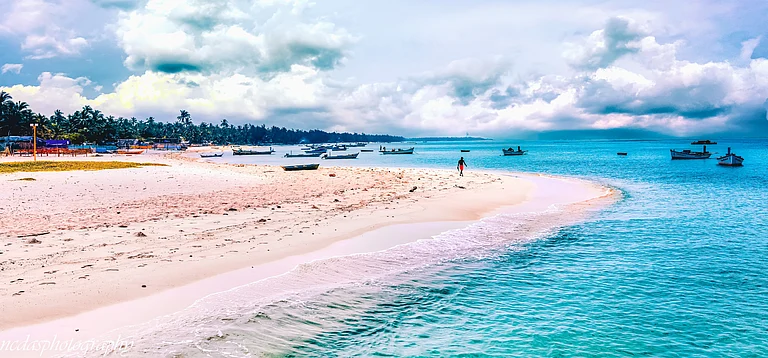
Minicoy, at 4 sq. km, is the second largest and southernmost island of the Lakshadweep archipelago and has immense potential to join the global whale shark tourism chapter.
Most of India's more than 7,000 km coastline is muddy and offers poor visibility. In recent years, I have travelled along the western coast, visited fish landing sites, and spent time with fisherfolk who all seem to be aware of the presence of whale sharks. While the big fish are present all along the coastline, the best place to see them is probably Minicoy for its crystal-clear waters and also where large congregations of whale sharks have been reported by local fisherfolk.
The whale shark may be the world's biggest fish, but we learned about their existence in Indian waters only at the fag-end of the nineties after a documentary film, "Shores of Silence" (2000) by Mike H Pandey, brought to light the killings of these creatures along the Gujarat coast. Fisherfolk were butchering the fish for its liver oil and using it to waterproof their boats. The film shook the wildlife conservation community and the government. Promptly, the shark was listed in Schedule I of the Wildlife Protection Act, but reports of killings kept coming in. These days, there is as much traffic (of large fishing boats and container ships) in the high seas as vehicular traffic in our metro cities. Whale sharks get regularly entangled in trawling nets—the scourge of the seas, get hit by cargo vessels and even get cut by ships' giant propeller blades. Then there is a depleting food source because of rising sea temperatures, pollution and ocean acidification; they can only consume shrimp, fish and plankton by using their gill rakers as a suction filter. Globally, the whale shark population continues to decrease.
Advertisement
Can India turn the tide for this gentle giant of the seas with tourism? For that, Lakshadweep and our coasts need all the conservation attention and political willpower they can get.
Ananda Banerjee is an author, artist and wildlife conservationist
Published At:
Tags